- support@ddgear.com
- North 3F, Building 13-2, Zhixin Park, NO.1099 Xianhua South Street, Wucheng, Jinhua, Zhejiang, China.

Electrical Tool

Electric Drill Gear – Custom Gears for Power Tools | DD Gear
Electric Drill Gear from DD Gear is a family of small-module, custom-designed spur and helical gears developed specifically for hand-held electric drills and related power tools. In these applications, a high-speed electric motor drives a compact gearbox that reduces speed and multiplies torque before the motion reaches the chuck, and the quality of the gear set directly affects torque output, service life, noise level and user comfort. DD Gear focuses on build-to-print cylindrical gears with optimized tooth geometry, material and heat treatment so that each gear set can withstand repeated starts, intermittent overload and high rotational speed in a very limited installation space. In most drill gearboxes, spur gears provide efficient and economical torque transfer between parallel shafts, while helical gears are used where quieter running and higher load capacity are required. For angle drills or special layouts, these stages can be combined with bevel or planetary gears to achieve right-angle or multi-stage reduction without sacrificing compactness. DD Gear works with forged and machined alloy steels as well as, when required, sintered or hybrid solutions defined by the customer, and applies small-module precision machining and controlled heat treatment to keep tooth accuracy, runout and surface condition within tight limits. This enables power-tool OEMs to build electric drills that deliver stable torque output, reliable service life and controlled NVH performance for both consumer and professional users
Custom Gears for Electric Grinder&Cutter | DD Gear
Custom Gears for Electric Grinder & Cutter from DD Gear are small-module, build-to-print gear sets engineered for angle grinders, straight grinders, cut-off machines and other handheld cutting and grinding tools. In these applications, a high-speed motor drives a compact gearbox that must reduce speed, multiply torque and withstand continuous high rpm, shock loads and abrasive dust. Gear design therefore has a direct impact on cutting efficiency, tool life, operator comfort and perceived product quality. Most grinder and cutter gearboxes rely on spur and helical gears for parallel-shaft stages and bevel or spiral-bevel gears for angle-head designs, where the disc or wheel must be driven at 90° relative to the motor axis. Spur gears offer simple, efficient torque transfer and are often used in internal reduction stages or straight grinders. Helical gears, with their angled teeth, provide smoother, quieter meshing and higher load capacity, which is important for professional-grade tools that must run at high speed with controlled noise and vibration. In angle grinders and compact cutters, a spiral bevel gear pair or a bevel + spur/helical combination is typically used to achieve the required speed reduction and torque at the output spindle in a very short axial length. Depending on torque level, production volume and cost targets, DD Gear can work with forged/machined alloy steels for maximum strength and durability, and coordinate with powder-metallurgy or hybrid solutions defined by the customer where near-net-shape gears are preferred. Small-module precision machining, controlled heat treatment and careful deburring help keep tooth accuracy, runout and surface condition within tight limits, enabling tool OEMs to build electric grinders and cutters that deliver stable torque, long service life and balanced NVH performance for both professional and DIY marketsPrecision Gears Built for the Future.
Trusted by Global OEMs, Proven in Every Application.
Your Custom Gear Solution Starts Here.

LOVE TO HEAR FROM YOU GET IN TOUCH!
Exploring The Science of Precision Gears
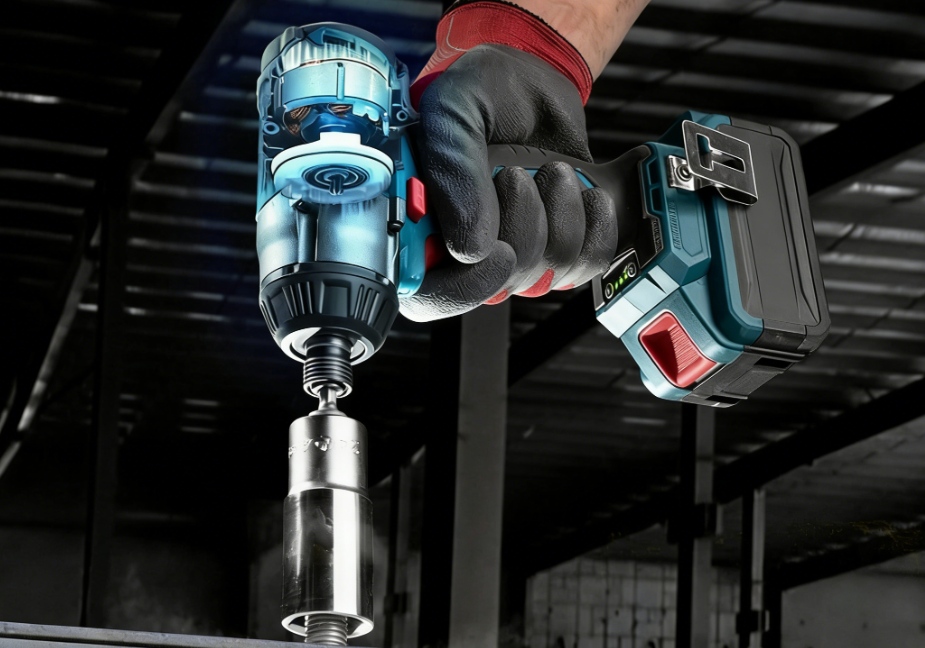
Brushless Power Tool Gears: Maximize Torque & Efficiency
In the world of professional construction and industrial assembly, the transition to brushless motor technology has fundamentally changed expectations for performance. A modern cordless drill or impact driver is expected to deliver the torque of a corded predecessor while remaining lightweight and compact. However, a powerful motor is only half the equation. Without a precision-engineered gear setups to manage that raw power, high-performance motors often lead to premature failure, excessive noise, and wasted energy. At DD Gear, we specialize in the silent support behind these automated setups, bridging the gap between raw electric force and steady physical action. The Brushless Revolution: Why Gear setups Must Evolve The shift to brushless DC (BLDC) motors has pushed the mechanical limits of traditional power tool gear setups. These motors often spin at speeds exceeding 15,000 RPM, which is far too rapid for direct application in most handheld tasks. High-Speed Motor Demands Modern tools require heavy reduction through small-module precision gears to convert fast, weak twists into the managed speed and firm pull needed for heavy starts and climbing slopes. Standard catalog parts often hit their limits in these high-speed environments where a drop of only 1% in efficiency can significantly cut a tool’s battery life. Optimization at the gear level is now the decided factor in how dependable a whole tool becomes. Instantaneous Torque and Dynamic Loads Unlike older brushed motors, brushless systems provide nearly instant peak torque. This sudden surge places immense stress on the tooth roots. In high-end applications like rotary hammers or large drills, the gear set must withstand repeated starts, intermittent overloads, and high rotational speeds within a very limited installation space. At DD Gear, our focus is on build-to-print cylindrical gears with optimized tooth geometry to handle these aggressive work cycles. Optimizing the Core: The DD Gear Technical Edge Optimizing a gear setup is not just about making parts fit; it is about managing energy conversion and durability through superior material science and geometry modifications. Precision Geometry for Efficiency The choice of tooth shape is the first key decision in optimization. DD Gear offers a range of gear solutions: Spur Gears: These offer high output (up to 98%) and create no side forces, making them ideal for cost-aware parallel-shaft stages in intermediate reduction. Helical Gears: For high-performance tools, helical gears are the preferred choice. Their teeth connect step-by-step, which cuts down on noise, shaking, and the rough feel significant for professional-grade tools. Planetary Gearsets: When high torque density and compact packaging are required—such as in the final drive of a compact drill—planetary sets deliver solid torque in areas as small as a coffee cup. Advanced Metallurgy for Extreme Durability A precision gear only lasts as long as the metal used to make it. DD Gear primarily uses high-load alloy steels like 18CrNiMo7-6 and 20MnCr5. Through controlled heat treatment, we can achieve a high outer hardness of HRC 58–62 to fight wear and dents, while keeping a more flexible center (HRC 35–45) to absorb sudden shock loads. This combination is vital for preventing tooth breakage under the sudden bumps or jolts common in construction sites. According to a study by the International Gear Conference, these material treatments are critical for extending the life of gears under dynamic loads. Application Scenarios: Solving Real-World Tooling Failures Understanding where gears fail allows us to implement specific solutions that standard manufacturers often overlook. Heavy-Duty Rotary Hammers The Problem: Professional users often encounter “disc jams” or impact with rebar during demolition work. This causes catastrophic tooth loss in inferior gear setups due to root cracks. The Solution: DD Gear utilizes specialized micro-geometry modifications like root easing and increased fillet radius to reduce stress concentration. By selecting carburizing alloy steels with a deep case depth, we have helped OEMs achieve a clear drop in tooth-failure claims. Precision Angle Grinders The Problem: High-speed grinding tools often produce a noticeable gear whine and vibration, which leads to operator fatigue during long shifts. The Solution: We implement Spiral Bevel Gears for the right-angle stage combined with precision-ground helical gears. By reaching a surface finish of Ra 0.4 μm, we can significantly reduce noise compared to straight-tooth types, making the tool feel more “premium” and stable. High-End Fastening Tools The Problem: Industrial assembly tools require repeatability and low-backlash to ensure precise torque control. Standard gears leave noticeable free play that causes shaky operation. The Solution: Our precision finishing can achieve ISO 1328 Grade 4–5 standards for specific projects. This minimizes “lost motion” so that control inputs reach the output without delay, ensuring repeated spots stay within minimal error. The DD Gear Advantage: Customization and Speed As a specialist in “Drive & Durable” gear solutions, we don’t offer stock items. Every job follows a build-to-print model, turning your specific 2D or 3D drawings into optimized mechanical components. ISO Grade 4-5 Accuracy Standards for Specific Projects Exactness is a clear measure that shapes power use and lifespan. By moving from basic Grade 7–8 to Grade 4–5 precision ground gears, drive setup output can increase by up to 1.2%. We verify this accuracy on computer-controlled gear tools to keep form errors within a minimal range. Rapid Prototyping for Competitive Markets In the fast-paced power tool industry, speed to market is everything. DD Gear supports your design cycle with Rapid Prototyping, delivering high-precision gear samples in just 2–3 weeks. Our engineering team doesn’t just manufacture; we act as a design helper, reviewing your requirements to develop a tailored solution for your exact torque, noise, and space constraints. Conclusion Unleash the full potential of your brushless motor. Don’t let your torque be limited by standard components. DD Gear provides the customized, high-precision transmission solutions required for the next generation of professional power tools. Whether you are building a two-stage helical reducer for a city-bound e-scooter or a compact planetary set for a surgical robot, our gears are built for the future. Contact DD Gear Today for a Free Quote WhatsApp: +86 182 5798 1010 Email: support@ddgear.com FAQ Q: What is the primary cause of gear noise in high-speed power tools? A: Gear noise is typically caused by transmission error resulting from minute tooth flank deviations. At speeds over 10,000 RPM, deviations of only a few microns turn into a noticeable high-pitched whine. Q: Why are helical gears increasingly replacing spur gears in brushless tools? A: Helical teeth mesh gradually along an angle, which significantly reduces the impact and vibration common in high-speed motors. This results in smoother operation and higher load capacity. Q: How does surface hardening impact a tool’s resistance to impact? A: High-grade carburizing creates a hard exterior (58-62 HRC) to fight wear, while maintaining a tough, flexible center (35-45 HRC). This allows the teeth to absorb sudden shock loads—like a drill hitting a knot—without cracking. Q: What accuracy standard is required for high-end professional tools? A: For high-performance tools requiring low noise and high efficiency, ISO 1328 Grade 4–5 is the benchmark. Achieving this level often requires precision grinding rather than just hobbing.
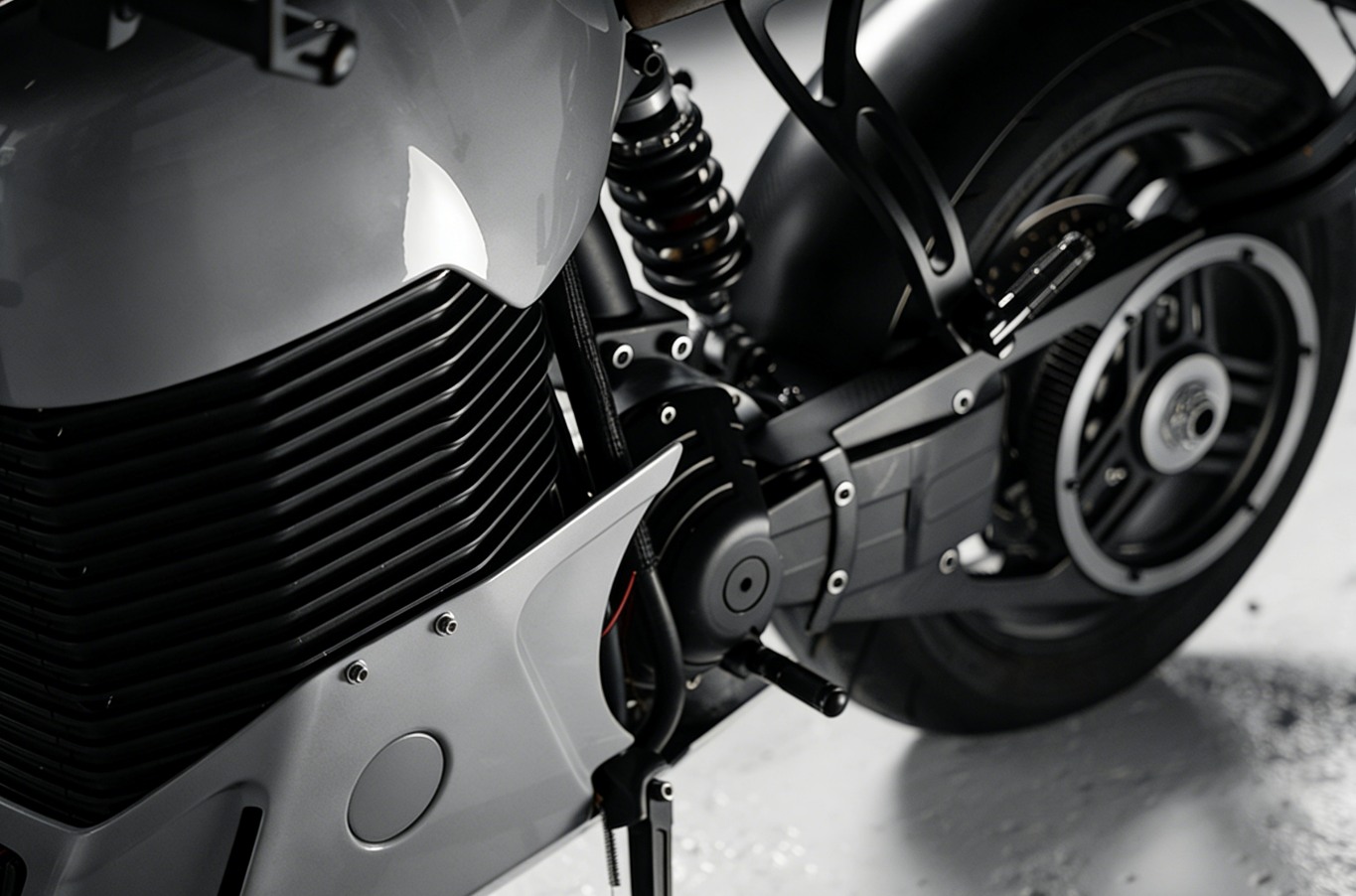
High-RPM EV Gears: Eliminate Whine with ISO 4-5 Precision
The shift from gasoline engines to powerful electric motors has changed the stresses that hit motorcycle drivetrains. Electric motors deliver instant torque and quick acceleration, but they push rotating parts to speeds well above 10,000 to 15,000 RPM. At such levels, ordinary industrial gears quickly hit their limits. They overheat, make a loud noise, or suffer sudden surface damage. DD Gear specializes in custom high-accuracy transmission parts and knows that lasting performance at high speeds comes down to tiny details in gear design. The Theoretical Challenges of High-RPM Transmission High-performance electric motorcycles depend on single-speed reduction setups to handle fast-spinning motors. These differ from classic motorcycle gearboxes because they face steady, rapid stress cycles without shifts. Rotational Dynamics and Centrifugal Force Mass Moment of Inertia: High RPM turns the gear mass into a heavy spinning object. This inertia slows the bike’s response when power comes on. Centrifugal Stress: Very fast rotation creates a strong outward pull. It bends tooth shapes by only a few microns, yet that small change throws off the proper contact area and leads to heavy edge pressure. Lubrication Fling-off: Fast-moving surfaces fling oil away from the teeth. Special finishes become necessary to hold a steady oil layer in place. The Impact of Transmission Error (TE) In fast e-axles, tiny errors in tooth form create transmission error. These small flaws repeat at high frequency and shake the gearbox casing. That shaking produces the sharp, annoying whine often heard in lower-quality electric systems. Cutting down this error calls for more than basic precision. It needs tooth shapes adjusted specifically to match the electric motor’s torque pattern. Advanced Metallurgy: The Foundation of Endurance A gear lasts only as long as the metal it comes from. Precision gear setups in electric motorcycles need materials that combine very hard surfaces with cores able to take shocks. Case-Hardened Alloy Steels DD Gear chooses better-than-standard steels for demanding high-torque jobs: 18CrNiMo7-6: This carburizing steel handles heavy loads well. It gives strong toughness inside and fights surface fatigue. 20MnCr5: This steel strikes a good balance between strength and resistance to sudden impacts. It suits many mid-drive reduction setups. Optimized Heat Treatment Profiles Long life comes from a careful heat treatment that builds a clear hardness change from outside to inside: Surface Hardness (58–62 HRC): The hard outer layer stands up to pitting and rubbing wear during high-speed running. Core Toughness (35–45 HRC): The softer inner part flexes enough to take sharp torque jumps in hard launches without breaking. Controlled Case Depth: Keeping the hardened layer depth within extremely small range keeps every gear in a batch working the same way. Professionals often turn to SAE International papers for detailed looks at how alloy makeup influences fatigue over many cycles. Precision Finishing and Micro-Geometry Optimization High-end electric bikes need gears that run quietly yet stay strong. That means finishing tooth surfaces to a very smooth, almost mirror finish to cut friction and heat buildup. Precision Tooth Grinding Regular hobbing falls short for high-speed electric motorcycle drivetrains. Grinding becomes essential to reach: ISO Grade 4–5 Accuracy: This level keeps pitch and profile errors very low. Vibration drops sharply even when the motor runs fast. Ra 0.4 μm Surface Roughness: Smoother tooth faces lower friction spots. That becomes the main way to stop oil from getting too hot in tight gearboxes. Customized Micro-Geometry Modifications No gearbox casing stays perfectly stiff. Heavy loads bend shafts and squeeze bearings. DD Gear adjusts tooth shapes to handle these actual deflections: Crowning: A gentle curve along the tooth length keeps the contact area in the middle even when shafts lean a bit. Tip Relief: Taking off a small amount of material at the tooth top creates a gentle start to meshing. It stops the harsh clash that builds noise at high speeds. Lead Correction: Slight changes to tooth direction correct for twisting of the input shaft under full motor torque. Power Transmission Engineering often discusses how ground gears improve performance in vehicle applications. Real-World Application Scenarios Small-module, high-accuracy gears make many electric motorcycle designs possible. Mid-Drive High-Speed Reducers The Application: A 15kW mid-drive motor turns at 12,000 RPM and feeds into a two-stage reduction before the chain. The Problem: The first spur-gear version created a loud whine during normal city riding at 40–60 km/h. The first-stage pinion also showed early pitting. The Customized Solution: A custom helical gear pair with carefully chosen helix angle and ISO Grade 4 grinding cut the whine by more than 6 dB. Lower friction added 2–3% to battery range. High-Torque Hub-Motor Planetary Sets The Application: A small planetary gear unit sits inside the rear wheel hub of an e-moped. The Problem: Extra unsprung weight and poor cooling space made regular planetary gears run too hot and fail on long uphill sections. The Customized Solution: High-torque planetary gears from 18CrNiMo7-6 steel used a thin-walled ring gear to save mass. Precision-ground planets kept efficiency high and avoided overheating issues. The DD Gear Advantage: Mastering Customized Precision Since 2010, DD Gear has worked closely with new industries. The focus stays on small-module high-precision gears (modules 0.3 to 1.5), where average quality never suffices. Our Customized Service Commitment Requirement Collection: We start with your 2D/3D drawings or checked physical parts to learn your torque and noise goals. Engineering Optimization: Our engineers propose changes to tooth forms and materials that fit your exact high-RPM working conditions and boost durability. Rapid Prototyping: High-accuracy samples arrive in 2–3 weeks, so your development team can test quickly instead of waiting months. ISO & IATF Quality: We follow ISO 9001 and IATF 16949 rules. This helps ensure our parts align with strict automotive standards for reliability and consistent performance. Ready to remove gearbox whine and make your e-motorcycle drivetrain last longer? Reach out to DD Gear now for a custom transmission answer that drives progress forward! WhatsApp: +86 182 5798 1010 | Email: support@ddgear.com FAQ Q: Why are helical gears generally preferred over spur gears for high-speed e-motorcycles? A: Helical teeth come into contact slowly instead of suddenly. That cuts shock and shaking, which greatly reduces the sharp whine heard when motors exceed 8,000 RPM. Q: Can gear precision actually influence the battery range of an electric motorcycle? A: Yes. Switching from common Grade 7-8 gears to custom-ground Grade 4-5 versions lifts drivetrain efficiency by 1% to 3%. For an electric vehicle, that gain means extra kilometers on each charge. Q: What is the most durable material for a pinion gear facing 15,000 RPM? A: Case-hardened alloy steels such as 18CrNiMo7-6 or 20MnCr5 work best. They deliver the hard surface needed to stop pitting and keep a strong core that stands up to sudden motor torque. Q: How does DD Gear handle the heat treatment distortion common in small-module gears? A: We rely on special fixtures during heat treatment. When needed, we grind the teeth after hardening to fix any warp and hold sub-micron precision.

Zero Tolerance for Error: Why Surgeons Trust Zero-Backlash Gears in Medical Robotics
In the modern operating room, the distance between a successful procedure and a critical complication is often measured in microns. As surgical robots become the standard for minimally invasive procedures, the demand for absolute mechanical precision has reached an all-time high. At the heart of these life-saving machines lies the transmission system—specifically, small-module precision gears that must translate a surgeon’s subtle hand movements into fluid, tremor-free robotic action. DD Gear has spent over 15 years perfecting the science of “Drive & Durable” motion, focusing on the high-precision requirements of emerging industries like medical robotics. We understand that in a surgical environment, there is zero tolerance for error, which is why our customized high-precision gear solutions are engineered to eliminate “lost motion” entirely. Defining Backlash and Its Impact on Clinical Outcomes In mechanical engineering, backlash is the clearance between mating gear teeth. While standard industrial applications may tolerate a few arc-minutes of play, surgical robotics requires near-zero backlash to ensure that control inputs reach the end-effector without delay or vibration. Why “Low Backlash” Isn’t Good Enough for Surgeons When a robotic arm performs a delicate suture or a resection near critical anatomy, any loose space in the gear line leads to: Wobble and Tracking Errors: The robotic path deviates from the intended trajectory, forcing constant controller retuning. Haptic Feedback Distortion: Surgeons rely on force control; backlash masks the tactile resistance of biological tissues. Micro-vibrations: High-speed electric motors spinning at 15,000 RPM can excite resonances if the gear mesh is not perfectly tight. The Theoretical Foundation of Lost Motion and Torsional Stiffness Mechanical play is the primary enemy of “repeatable spots” in robotics. Achieving extremely low level tolerance requires gears with high torsional stiffness—the ability to resist twisting under load. By utilizing customized high-stiffness planetary gear reducers with integrated output shafts, engineers can distribute loads across multiple teeth simultaneously, which inherently increases stiffness and reduces the risk of positional artifacts. DD Gear: customized Engineering for Surgical Actuators Standard off-the-shelf components often fail to meet the strict Noise, Vibration, and Harshness (NVH) targets required for hospital environments. At DD Gear, we do not offer a standard catalog for medical robotics; instead, we deliver customized solutions that fit specific duty cycles and space limits. Building-to-Print for Complex Joint Architectures Surgical robots utilize monoblock integrated gear-shaft assemblies for robotic wrist actuators to reduce assembly joints and improve overall alignment. Our customized manufacturing process includes: Requirement Collection: Reviewing detailed 2D/3D drawings or physical samples. Optimization: Tweaking lead corrections and profile shifts to minimize loaded transmission errors (TE). Rapid Prototyping: Delivering high-precision samples in just 2–3 weeks to support tight R&D schedules. Material Selection: From Carburizing Alloy Steels to Non-Magnetic Options The durability of a medical drivetrain depends on the harmony between surface hardness and core flexibility. High-Load Joints: We use case-hardening steels like 18CrNiMo7-6 or 20MnCr5, achieving a surface hardness of 58–62 HRC to fight wear while maintaining a shock-absorbing core. Nitriding for Stability: For lighter instrument stages, nitriding provides a hard surface with almost no distortion, preserving extremely low tolerances. Non-Magnetic Requirements: For robotic modules operating near MRI scanners, we provide customized gears made from austenitic stainless steel or aluminum bronze to eliminate magnetic interference. Application Scenarios: Where Accuracy Saves Lives Precision gears are the “silent support” in automated medical setups. Understanding where these gears are applied helps differentiate high-performance systems from basic automation. Minimally Invasive Instrument Modules In the “wrist” of a surgical robot, customized sub-miniature helical gears for multi-axis robotic articulators must operate in a housing no larger than a coffee mug. These gears enable the multi-degree-of-freedom movement required for deep-cavity surgery and ensure that the instrument tips remain stable even when the motor reverses direction hundreds of times per minute. For more information on the evolving standards of surgical robotics, you can explore the National Center for Biotechnology Information (NCBI), which details the integration of mechanical precision in robotic-assisted surgery. MRI-Adjacent Positioning and Imaging Tables Diagnostic systems, such as CT and MRI scanners, require high-torque performance and compact designs for moving patient tables. DD Gear provides customized anti-backlash worm gear pairs for MRI-compatible patient positioning tables because they offer: Self-Locking Safety: Ensuring the table holds its position near the scanner gantry even if power fails. Acoustic Excellence: Operating at levels below 60 dB to maintain patient comfort in quiet hospital wards. Smooth Motion: Reaching surface roughness levels of Ra 0.4 μm through precision grinding to eliminate “motion ripples” that could cause image artifacts. Technical Excellence: The DD Gear Customized Manufacturing Process How do we guarantee that our gears meet the “Zero Tolerance” requirements of the medical industry? It comes down to sub-micron verification and advanced finishing. Achieving High ISO Grade Accuracy through Advanced Grinding DD Gear utilizes Reishauer and Klingelnberg grinders to achieve ISO 1328 Grade 4–5 precision for specific projects. This level of accuracy is essential for reducing transmission errors that cause high-pitched whines in high-speed electric motors. Micro-Geometry Modifications for Vibration-Free Operation Basic tooth shapes are often insufficient for the high-duty cycles of surgical robots. Our engineering team applies specific modifications: Tip Relief and Crowning: rounding tooth tips and curving the tooth face to prevent concentrated loads and ensure gentle entry during meshing. Lead Corrections: Small adjustments that distribute torque evenly across the gear face, extending the service life by 30%. To understand the deeper physics of how tooth geometry affects sound and vibration, refer to the technical research published by Nature: Scientific Reports on gear transmission error and noise control. Quality Control: Verification on Klingelnberg Measuring Centers We don’t just promise precision; we verify it. Customized batch undergoes detection of key features. Using Klingelnberg P26/P40 gear measuring machines, we verify: Tooth Profile and Lead Deviation: Ensuring deviations is at an extremely low level. Backlash Windows: Monitoring play to ensure it meets the startup’s specific joint requirements. Concentricity and Runout: Essential for stable alignment in high-speed rotor shafts. The Path from Prototype to Production In the fast-changing world of medical technology, speed is as important as accuracy. DD Gear bridges the gap between a design concept and a stable mass-production part through our streamlined, customized process. Agile Prototyping: We offer flexible MOQs, handling everything from a single prototype to medium-sized production runs. Build-to-Print Precision: We manufacture directly from client drawings, ensuring that the final component integrates seamlessly into existing housings. Global Reach: With certifications like ISO 9001 and IATF 16949, we serve medical OEMs in over 30 countries, ensuring that every gear hits high automotive and industrial standards. Ready to Drive Your Medical Innovation Forward? Don’t let mechanical play compromise your surgical precision. Contact DD Gear today to develop a customized small-module gear solution tailored to your exact torque, noise, and zero-backlash requirements. [Get a Free Quote & Engineering Consultation Today] FAQ Q: Can DD Gear provide non-magnetic gears for MRI-conditional environments? A: Yes, we provide customized gears using non-magnetic austenitic stainless steel and aluminum bronze specifically for modules adjacent to MRI scanners. Q: What is the primary cause of gear whine in surgical actuators? A: Gear whine is typically caused by transmission error resulting from minute tooth flank deviations. At speeds over 10,000 RPM, deviations of just a few microns can create a significant whine. Q: Why are small-module gears (0.3–0.8) necessary for modern medical robotics? A: They allow designers to fit large torque and high reduction ratios into very compact joint actuators, preventing the gearbox from taking up unnecessary room in the surgical field. Q: How long does it take to receive a customized gear prototype? A: We typically deliver customized gear prototypes within 2–3 weeks, allowing engineering teams to iterate on designs quickly.
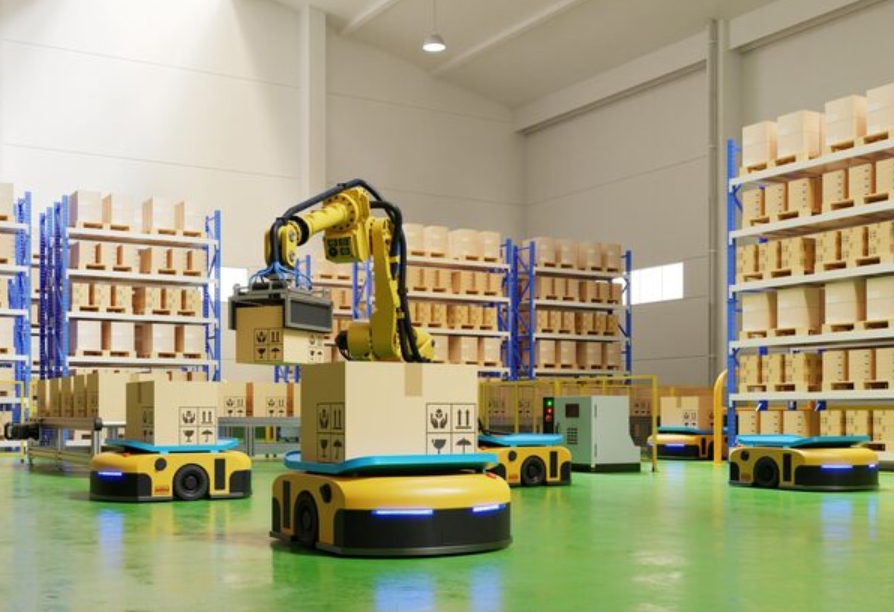
Precision at the Warehouse: Why AGV Reliability Starts with High-Load Precision Gears
Modern warehouses run on continuous automated processes. Automated Guided Vehicles (AGVs) and Autonomous Mobile Robots (AMRs) form the backbone of daily material movement. These machines work without breaks, yet their mechanical parts face constant heavy strain. The drive unit stands as a central element in every mobile robot. High-load gearsets inside that unit often decide whether operations continue smoothly or face expensive interruptions. DD Gear focuses on designing and producing small-module, high-precision gears. These components target the tough operating patterns found in robotics and logistics. The company has concentrated on custom transmission solutions. Accuracy, long service life, and low noise remain the main priorities. The Challenge of High-Frequency Warehouse Operations AGVs in warehouses do far more than simple travel. They execute repeated high-torque actions in narrow aisles. This pattern places unusual demands on conventional gear systems. Understanding the 24/7 Start-Stop Cycle Logistics robots work under conditions quite different from standard industrial trucks. Constant Reversals: AGVs change direction often. They accelerate and decelerate quickly while moving between storage racks and picking stations. High Torque at Low Speed: Shifting pallets that weigh 600–800 kg requires high-torque density from custom wheel-hub planetary gearsets, even at slow speeds. Thermal Accumulation: Nonstop running leaves almost no downtime for cooling. Heat builds steadily, raising the chance of oil breakdown and surface damage on gear teeth. The Impact of Premature Wear Gears without sufficient precision or material strength show several types of failure. Pitting and Micro-spalling: Intense contact pressure damages tooth surfaces over time. This leads to audible gear noise and increased vibration. Backlash Growth: Worn teeth create larger gaps between meshing pairs. The added clearance causes lost motion. Positioning then becomes less reliable, and closed-loop controls may trigger frequent encoder faults. NVH (Noise, Vibration, and Harshness): Excessive gear mesh noise in shared workspaces creates an uncomfortable setting and lowers worker focus. Research on material fatigue in repeated high-cycle applications appears regularly in ScienceDirect on gear wear and tribology. Engineering Reliability into Small-Module Precision Gears Standard catalog parts seldom withstand these conditions for long. Custom high-precision designs become necessary to address wear from frequent use. The Shift to Small-Module Precision Contemporary robot layouts require tight packaging. The field has moved toward small-module precision gears, customized ultra-fine pitch gears (modules 0.3–0.8mn) for compact actuators. Fine teeth produce very high reduction ratios inside housings about the size of a coffee mug. Torque Density: Small teeth support detailed power transfer in compact wheel-hub assemblies. Integrated Design: Gear and shaft made as one piece, cutting down assembly connections. Alignment improves, and vibration drops noticeably. Planetary Gearsets for Compact Power Heavy-duty AGV forklifts and warehouse robots frequently rely on planetary gear drives. Load Sharing: Several planet gears carry force at the same time. This arrangement handles much higher torque than a single spur gear of equal diameter. Coaxial Efficiency: The inline layout fits neatly into drive wheel hubs. Material Science: The Foundation of Durability Gear reliability depends heavily on the alloy and its treatment. DD Gear selects advanced steels and applies careful heat processes. Every custom gearset then endures millions of cycles. Selecting High-Load Alloy Steels AGV transmissions need materials that combine a hard exterior with a tough interior. 18CrNiMo7-6 & 20MnCr5: These case-hardening steels form a very wear-resistant surface. The core stays flexible enough to take sudden impacts. HRC 58–62 Hardness: Carburizing and quenching produce this surface rating. It resists contact fatigue and surface dents effectively. Precision Heat Treatment Standards Heat treatment largely determines final gear performance. Controlled Carburizing: The method builds deep hard layers, up to 1.2 mm thick. Surface wear in drive wheels decreases markedly. Nitriding for Stability: Lighter gear stages that demand minimal shape change benefit from nitriding. Tight tolerances hold steady through the process. Micro-Geometry Modifications Even premium steel fails without a proper tooth shape. Subtle changes to the tooth profile improve results. Tip Relief: Rounded tooth tips allow smooth entry and exit from contact. Impact noise drops. Crowning: A slight curve along the tooth face avoids edge stress peaks. Working life extends significantly. Lead Corrections: Small adjustments spread torque more evenly across the face. Early pitting risk falls. Where High-Precision Gears Solve Real Problems Theory matters, yet field results show the practical worth of these custom precision gears for AGV. Pallet-Handling AGVs in Distribution Centers Large logistics facilities run robots that transport loads up to 800 kg across concrete floors around the clock. Problem: Older spur gears showed pitting on tooth surfaces. Noise often rose above 60 dB, disturbing nearby workers. Solution: A customized multi-stage planetary-helical gearbox for high-torque AGV steering and drive lowered sound to the mid-50 dB range. Torque capacity increased at the same time. Result: Drive unit maintenance periods doubled. Unplanned stops decreased by nearly half. Precise Positioning in AMR Picking Robots Pick-and-place units need consistent extremely high accuracy when aligning with storage shelves. Problem: Standard gearboxes developed growing backlash. The robot swayed during fast travel. Controllers required ongoing adjustments. Solution: Customized zero-backlash precision ground gears for sub-millimeter positioning accuracy can reach ISO Grade 4–5 accuracy. Torsional stiffness rose noticeably. Result: Drive behavior stabilized. Positioning held steady. Robots moved faster and handled more tasks per shift. Current developments in robot drive systems receive regular coverage in Machine Design industry reports. The DD Gear Advantage: Why Customized Engineering Matters DD Gear avoids standard product catalogs. High-performance transmission arises from parts shaped to match the real operating demands of each robot. Build-to-Print Precision DD Gear specializes in build-to-print small-module gear manufacturing for OEM robotics projects. Production uses customer drawings or confirmed samples directly. Accuracy Verification: CNC gear measuring equipment checks every part. Some specific projects can achieve ISO 1328 Grade 4–5 levels, depending on design requirements and application needs. Rapid Prototyping: Custom gear prototypes ship in 2–3 weeks. This timing fits urgent development schedules. Comprehensive Customization Services extend past basic dimensions. Material Selection: Alloys match the specific load environment, including non-magnetic choices for medical robotics. Optimization: Tooth geometry receives adjustments for the lowest possible NVH profile. Flexible Volumes: Production scales from single test pieces to moderate batch runs. Master the Future of Motion with DD Gear Does your AGV fleet show early wear or high noise levels? Improve motion control with DD Gear’s detailed engineering. The team stands ready to create a custom gear solution suited to your torque, noise, and space needs. Contact DD Gear Today for a Free Quote and Rapid Prototyping! FAQ Q: What accuracy grades are required for modern AGV drive units? A: High-performance AGVs generally need ISO 1328 Grade 4–5 precision ground gears. These levels support low noise and reliable positioning. Q: Why is small-module design preferred over larger gear modules? A: Modules from 0.3–0.8 pack large torque and high reduction ratios into very small spaces. Gearboxes then avoid taking up extra room inside the robot. Q: How does carburizing improve gear lifespan? A: Carburizing forms a hard outer layer at HRC 58–62. It fights wear effectively. The flexible core absorbs shock loads from frequent starts and stops. Q: Can customized gears help with battery driving range? A: Yes. Switching from standard Grade 7–8 gears to precision Grade 4–5 versions raises drivetrain efficiency by up to 1.2%. Large fleets see meaningful power savings and longer run times per charge.
Driving Precision Forward with
Custom gear solutions
Please fill out the form below and we will get back to you as soon as possible.