- support@ddgear.com
- North 3F, Building 13-2, Zhixin Park, NO.1099 Xianhua South Street, Wucheng, Jinhua, Zhejiang, China.

Case
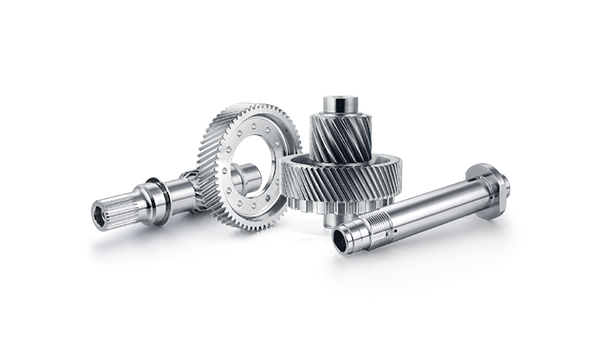
EV Gear – Custom Helical Reduction Gears for Passenger EV Drive Unit
Case Highlights
A new-energy vehicle OEM was developing a front-drive e-axle for a C-segment passenger EV. The original prototype reducer used standard helical gears, but whine noise at highway speeds and mesh efficiency were not yet at target.
DD Gear delivered a two-stage small-module helical gear set with optimized micro-geometry and case-hardening steel (18CrNiMo7-6), a material widely used in high-load automotive gears thanks to its strong, tough core and wear-resistant case. After tuning on DD Gear prototypes, the project achieved:
Quieter mesh in key speed ranges (improved interior NVH impression).
Higher mesh efficiency, contributing to better energy consumption. Research shows that properly optimized helical gears and surface finishing are essential for high-efficiency EV reducers.
Customer Background & Project Scope
Customer industry: New-energy passenger vehicle OEM.
Application: Single e-axle with a two-stage helical reduction between a high-speed PMSM traction motor and the differential.
Target vehicle: Front-wheel-drive compact EV used for city and highway commuting.
Key requirements:
High efficiency over WLTP-type drive cycles.
Very low gearbox whine, because EVs lack engine masking; tonal gear noise is easily heard.
Consistent quality at automotive mass-production volumes.
The OEM’s baseline design already used helical gears, but gear micro-geometry, material grade and grinding needed to be improved to meet aggressive NVH and durability targets.
Challenges
Gear whine around cruising speeds
Interior tests showed noticeable tonal noise from the reducer at typical mesh frequencies during 80–110 km/h cruising.
Even though helical gears inherently run smoother and quieter than spur gears, transmission error (TE) and manufacturing deviations can still excite annoying tones in EVs.
Efficiency & thermal performance
The reducer needed better mesh efficiency to support competitive kWh/100 km figures.
Literature indicates that finely ground or polished helical gear flanks and optimized micro-geometry are key to reducing losses and avoiding micropitting in EV gearboxes.
Durability at high speed & torque
High input speed and peak torque demanded a deep case-hardened alloy steel with good core toughness. 18CrNiMo7-6 / 17CrNiMo6 case-hardening steels are commonly used in heavy-duty industrial and automotive gears for this reason.
DD Gear Solution
1. Helical Gear Design & Micro-Geometry
Two-stage helical layout
Maintained the overall ratio requested by the OEM, but adjusted tooth counts and helix angles to improve contact ratio and mesh kinematics.
Helical gears are preferred in EV transmissions because gradual tooth engagement reduces impact, vibration and noise compared with spur gears.
Multi-objective micro-geometry optimization
Applied profile and lead modifications (crowning, end-relief) based on contact and dynamic simulations to minimize loaded transmission error over the main torque/speed window. Similar studies show that careful tooth modification is an effective method to reduce vibration and noise in helical gear transmissions.
Focused on those gear pairs contributing most to audible whine, following EV transmission noise analysis practices.
2. Materials & Heat Treatment
Case-hardening steel
Selected 18CrNiMo7-6 for high-load gears; this case-hardening steel offers excellent surface hardness, core strength and toughness for gears and shafts in demanding transmissions.
Case depth and hardness were specified to match the OEM’s load spectrum.
Heat treatment & finishing
Carburizing + quenching followed by fine gear grinding; grinding is recommended in EV gear design guidelines to achieve high efficiency and reduce micropitting risk.
Surface finishes were tuned to support low-viscosity oils used for efficiency in modern EV transmissions.
3. Manufacturing & Gear Accuracy
ISO 1328 accuracy
Tooth profile, helix deviation and pitch controlled to ISO 1328 Grade 4–5, a high accuracy class suitable for low-noise, high-speed helical gears.
Process control
SPC on critical dimensions, flank deviations and runout.
Routine gear-pair tests for TE, loaded contact pattern, and backlash before release.
Results
After adopting the DD Gear gearset and running multiple prototype loops:
NVH
Interior measurements showed significant reduction in tonal gear noise in the previously critical speed bands.
The cabin sound profile became more dominated by road and wind noise, which is the typical design goal for refined EVs.
Efficiency & thermal behavior
Bench tests indicated a measurable improvement in reducer efficiency (in line with studies that show optimized helical gear design and finishing can boost efficiency).
Temperature rise of the gearbox oil under steady-state highway operation was reduced compared with the baseline design.
Durability & robustness
Endurance testing under the OEM’s duty cycles showed stable contact pattern and no early micropitting or scuffing in the test window.
The OEM approved the DD Gear design for SOP and listed DD Gear as a key gear supplier for this EV program.
Typical Technical Specifications
Representative; DD Gear customizes parameters for each EV platform.
Item
Parameter
Gear Layout
Two-stage small-module helical reduction
Power Range
~80–150 kW traction motor (program-dependent
Gear Ratio
Overall i ≈ 8–12 (per OEM design)
Module Range
m 1.5–3.5 (helical)
Material
18CrNiMo7-6 / similar case-hardening steels
Surface Hardness
Case-hardened, high hardness with tough core
Accuracy Grade
ISO 1328 Grade 4–5
Case Summary
By combining high-grade case-hardening steel, EV-oriented helical gear micro-geometry, and ISO Grade 4–5 gear accuracy, DD Gear helped this EV OEM:
Reduce gear whine and tonal noise in the e-axle.
Improve mesh efficiency and thermal behavior under real driving cycles.
Validate a robust, series-production gearset for its new EV platform.
This approach is suitable for passenger EVs, hybrid drive units and light commercial EVs that demand high efficiency and low NVH.
Developing a new e-axle, motor reducer or auxiliary EV drive?
Contact DD Gear’s engineers to co-design small-module helical gears that balance efficiency, NVH and durability.
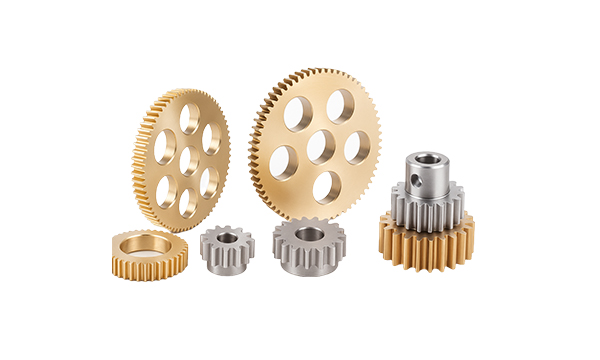
Medical Equipment Gear – Driving Accuracy in High-End Devices
Case Highlights
A European medical-equipment OEM needed very quiet, precise motion in its imaging systems: patient table drives and positioning axes near the scanner gantry. Existing gears caused noticeable noise and slight motion ripple, which could affect patient comfort and positioning repeatability.
DD Gear supplied small-module helical and bevel gears with low-noise geometry and, for MRI-adjacent modules, options in non-magnetic materials. The new gearsets delivered smoother motion, lower sound levels near the patient, and more stable positioning, while fitting into the OEM’s existing drive layout. Medical imaging and diagnostic devices generally require smooth, quiet components to avoid disturbing patients and to protect image quality.
Customer Background & Project Scope
Customer industry: European manufacturer of imaging and diagnostic systems (CT / angiography / X-ray tables; some MRI-adjacent equipment).
Application:
Horizontal and vertical motion of patient tables.
Rotary and linear positioning of imaging heads or detector modules.
Key requirements:
Quiet operation close to patients, in line with hospital noise expectations. High-contact-ratio helical gears are often used to meet hospital noise requirements.
Smooth, backlash-controlled motion to avoid image artifacts and re-scans.
For MRI-adjacent axes, low-magnetic or non-magnetic material options (aluminum, bronze, austenitic stainless, etc.).
The OEM’s legacy drives used a mix of standard steel spur/helical gears. As systems evolved toward higher resolution and more patient-friendly environments, noise and micro-vibration became limiting factors.
Challenges
Noise and patient comfort
During table movement and gantry positioning, sound pressure near the patient couch was higher than the OEM’s new target.
Tonal gear noise was particularly noticeable in quiet imaging rooms, where background noise is low and patients may already be anxious.
Smoothness & positioning repeatability
Existing gears showed small but measurable backlash growth over time, leading to micro-steps in motion at low speeds.
For fine positioning during imaging, this could risk slight misalignment and occasional re-scans.
MRI-adjacent material constraints
For modules near MRI rooms or using shared design blocks, the OEM requested options using non-magnetic metals (aluminum, bronze, austenitic stainless steels), which are commonly used for MRI-compatible components.
DD Gear Solution
1. Gear Design & Layout
Small-module helical gears for quiet axes
Replaced selected spur gears with small-module helical gears of higher contact ratio. Helical gears are widely used in medical motion systems and medical pumps because their gradual tooth engagement reduces impact and noise.
Applied profile and lead modifications to minimize loaded transmission error and to keep motion smooth at low speed.
Helical / bevel combinations for space-constrained drives
Where right-angle motion was required (e.g., compact table columns), DD Gear used small-module bevel or spiral-bevel gears matched to a helical stage, similar to solutions seen in high-precision medical reduction gearboxes.
Backlash tuning for positioning axes
Controlled backlash windows to maintain table and detector positioning repeatability while allowing safe operation under temperature changes.
2. Materials & Heat Treatment
Standard medical axes (non-MRI)
Primary gearsets in alloy steels (e.g., 16MnCr5 / 20CrMnTi) with carburizing + grinding in high-load axes, and nitriding for lower-load, high-precision stages where low distortion is critical.
Gas/plasma nitriding is commonly used for precision components because it enhances surface hardness with minimal distortion, preserving tight tolerances.
MRI-adjacent options
Where magnetic fields or MR-conditional constraints applied, DD Gear proposed gearsets in non-magnetic metals such as aluminum bronze, brass, or austenitic stainless steels, consistent with MRI-compatible component guidelines.
Surface hardening methods were selected to balance wear resistance with low distortion and corrosion performance.
3. Manufacturing & Quality Control
Fine pitch & small-module machining
Modules in the m 0.5–2.0 range, with tight profile and lead tolerances.
Precision hobbing and grinding to achieve high flank quality and low roughness, which is essential for quiet, smooth motion in medical devices.
Accuracy & inspection
Target accuracy ISO / DIN Grade 4–6 depending on axis criticality, in line with typical high-precision medical/robotic reduction gears.
100% check of critical dimensions, plus sampling of tooth form, runout and backlash on a CNC gear measuring machine.
For selected units, assembled drives were noise-tested at medical room-like conditions.
Results
Noise & comfort
Measurements near the patient table showed a clear reduction in operating noise (several dB lower in key speed ranges), making motion less intrusive in the imaging room.
Subjectively, motion sounded softer and more “electric-motor-like”, consistent with the quiet operation that high-precision gears can bring to medical devices.
Smooth motion & positioning
Improved backlash control and smoother torque transfer reduced small steps and micro-vibration at low speeds.
Imaging engineers reported more stable positioning and fewer motion-related artifacts, reducing the likelihood of re-scans.
MRI compatibility & design reuse
For MRI-adjacent axes, the OEM could use non-magnetic gear options sharing the same basic geometry as standard metal versions, simplifying design reuse across product families while meeting MRI-safe / MRI-conditional requirements.
Integration
DD Gear’s gearsets were designed as drop-in replacements, so the OEM kept its existing housings and motor layouts, reducing project risk and implementation time.
Typical Technical Specifications
Representative; DD Gear customizes to each device and axis.
Item
Parameter
Gear Types
Small-module helical / bevel / spiral-bevel gears
Module Range
m 0.5–2.0
Materials
Alloy steel (carburized / nitrided); bronze; austenitic stainless
Surface Hardness
Up to ~HRC 58–62 (carburized) / high HV nitrided surfaces
Accuracy Grade
ISO / DIN 4–6
Treatments
Carburizing + grinding; gas / plasma nitriding (low distortion)
Case Summary
By combining low-noise helical and bevel designs, low-distortion surface treatments, and MRI-compatible material options, DD Gear helped this medical-equipment OEM:
Lower noise levels and improve patient comfort near imaging systems.
Achieve smoother, more precise positioning motion with stable backlash over time.
Reuse a common gear architecture across standard and MRI-adjacent equipment.
This approach is ideal for imaging systems, diagnostic tables, medical robots, and other precision medical devices that require quiet, accurate, and reliable gear drives.
Designing a new imaging table, diagnostic device or medical robot drive?
Contact DD Gear’s engineers to develop quiet, small-module precision gears tailored to your medical application and regulatory needs.
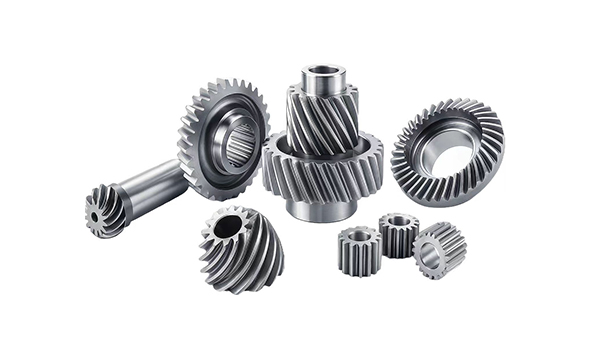
Humanoid Robot Gear – Low-Backlash Joint Gears for Stable Motion
Case Highlights
A Korean startup developing a bipedal humanoid robot needed very precise, low-backlash joint drives for hips, knees, shoulders, and elbows. Early prototypes used off-the-shelf gearboxes that left too much backlash and torsional compliance, making balance control and smooth walking difficult. Backlash is widely recognized as one of the most critical error sources in robot joints.
DD Gear engineered small-module spur and helical gears for the joint actuators’ internal reducers (planetary + right-angle stages). Combined with the customer’s strain-wave final stage, the upgraded gearsets delivered lower backlash, higher torsional stiffness, and smoother motion, helping the robot achieve more stable walking and arm trajectories. High-precision, low-backlash planetary and strain-wave reducers are standard in modern robotics and humanoid joints.
Customer Background & Project Scope
Customer industry: Korean startup focusing on humanoid robots for logistics and R&D.
Application: Integrated joint actuators combining a frameless torque motor, multi-stage gear reducer and encoder—similar to common humanoid joint modules that use zero-backlash precision gears and high-resolution encoders.
Joints covered: Hip pitch/roll, knee, ankle, shoulder and elbow.
Project goals:
Reduce mechanical backlash and increase torsional stiffness to stabilize balance and foot placement. Backlash and stiffness strongly influence motion accuracy and stability in robotic joints.
Keep actuators compact and lightweight for whole-body dynamics.
Support fast prototype iterations (small batches, 2–3 week sample lead time).
Challenges
Backlash causing wobble and tracking errors
Early drives used standard low-cost planetary gearheads with several arc-minutes of backlash.
When the robot shifted weight or swung its arms, control commands were partially “lost” in the mechanical play; the robot swayed and required frequent controller retuning.
Limited torsional stiffness in joint train
Under dynamic walking and push-recovery tests, joints twisted more than expected.
Insufficient stiffness in the gear stages amplified oscillations at the extremities—an issue also highlighted in recent research on robot joint stiffness.
Small-module, high-accuracy gears needed
Joint actuators relied on small-diameter, small-module gears to fit within compact housings.
The customer needed ISO Grade 4–5 level accuracy on key gears, similar to other high-precision robotics applications where ISO 1328 Grade 4–6 is used to minimize vibration and wear.
DD Gear Solution
1. Joint Reducer Gear Design
Low-backlash planetary & spur/helical gearsets
DD Gear co-designed small-module sun, planet and ring gears for the first reduction stage, targeting very low backlash when assembled with the startup’s preloaded bearings.
A compact helical or bevel stage was used where right-angle layouts were required (e.g., hip roll joints), similar to precision robotic gear reducers that combine planetary and bevel stages.
Micro-geometry tuning
Applied profile and lead modifications so multiple teeth share the load evenly and to minimize loaded transmission error, an approach widely used to improve smoothness and reduce noise in precision gearboxes.
Target backlash at the planetary output was kept within a few arc-minutes, so that, after the strain-wave final stage, overall joint backlash was close to the near-zero levels typical of high-end humanoid joints.
2. Materials & Heat Treatment
Carburizing alloy steels for high torque density
Selected 20MnCr5 / 18CrNiMo7-6 case-hardening steels for sun and planet gears—steels widely used in high-load planetary and robotic gear applications because they combine deep case hardness with a tough core.
Case depth tuned (~0.8–1.2 mm) for high contact fatigue strength without excessive distortion.
Heat treatment & finishing
Carburizing + quenching followed by precision gear grinding on critical gears to reach ISO 4–5 flank accuracy and low roughness—key for low noise, high efficiency and long life in robotics gearboxes.
3. Manufacturing & Quality Control
Small-module precision capabilities
Modules in the m 0.5–1.5 range machined using dedicated small-module hobbing and shaping processes; similar machines are marketed specifically for robot small-module gears.
Inspection & testing
100% check of key dimensions; sampling of tooth profile, helix deviation, and runout on a CNC gear measuring center.
Paired gearsets tested for backlash and torque transmission; assembled joint prototypes tested for torsional stiffness and lost motion before shipment.
Results
After integrating DD Gear’s components into its joint actuators, the startup reported:
Lower backlash & improved stiffness
Measured joint lost motion significantly reduced, bringing behavior close to the near-zero backlash levels achieved by precision planetary and strain-wave systems used in advanced humanoid and collaborative robots.
Increased torsional stiffness at the joints reduced oscillations at the robot’s extremities, improving positional accuracy and stability.
More stable walking & smoother manipulation
Balance controller tuning became easier; the robot showed less sway during single-support phases and better recovery under pushes.
Arm trajectories became smoother with fewer overshoot corrections, which matched the team’s expectations from high-precision, low-backlash drives.
Fast iteration & scalability
DD Gear supplied small prototype batches in 2–3 weeks, enabling the startup to iterate mechanical and control designs quickly.
The same gear families are now used across multiple joint sizes (hip vs. wrist), simplifying BOM and future volume scaling.
Typical Technical Specifications
Representative for humanoid hip/knee/shoulder joints; DD Gear customizes per project.
Item
Parameter
Gear Types
Small-module spur / helical / planetary gears
Module Range
m 0.5–1.5
Materials
20MnCr5, 18CrNiMo7-6 case-hardening steels
Case Depth
~0.8–1.2 mm
Surface Hardness
HRC 58–62 (case), tough core for shock loads
Accuracy Grade
ISO / DIN 4–5 on critical gears
Case Summary
By combining small-module high-accuracy gears, low-backlash planetary stages, and EV-grade case-hardening steels, DD Gear helped this humanoid-robot startup:
Cut joint backlash and raise torsional stiffness, enabling more stable walking and manipulation.
Maintain compact actuator size while increasing torque capacity and durability.
Iterate fast from prototype to pilot builds with reliable small-batch production.
This approach is ideal for humanoid robots, collaborative arms, service robots and exoskeletons that need compact, precise, and durable joint gear solutions.
Working on humanoid or advanced robotic joints?
Contact DD Gear’s engineers to co-develop small-module, low-backlash gearsets tailored to your joint actuators.
OUR CAPABILITIES
Driving Precision Forward with
Driving Precision Forward with
Custom gear solutions
Please fill out the form below and we will get back to you as soon as possible.